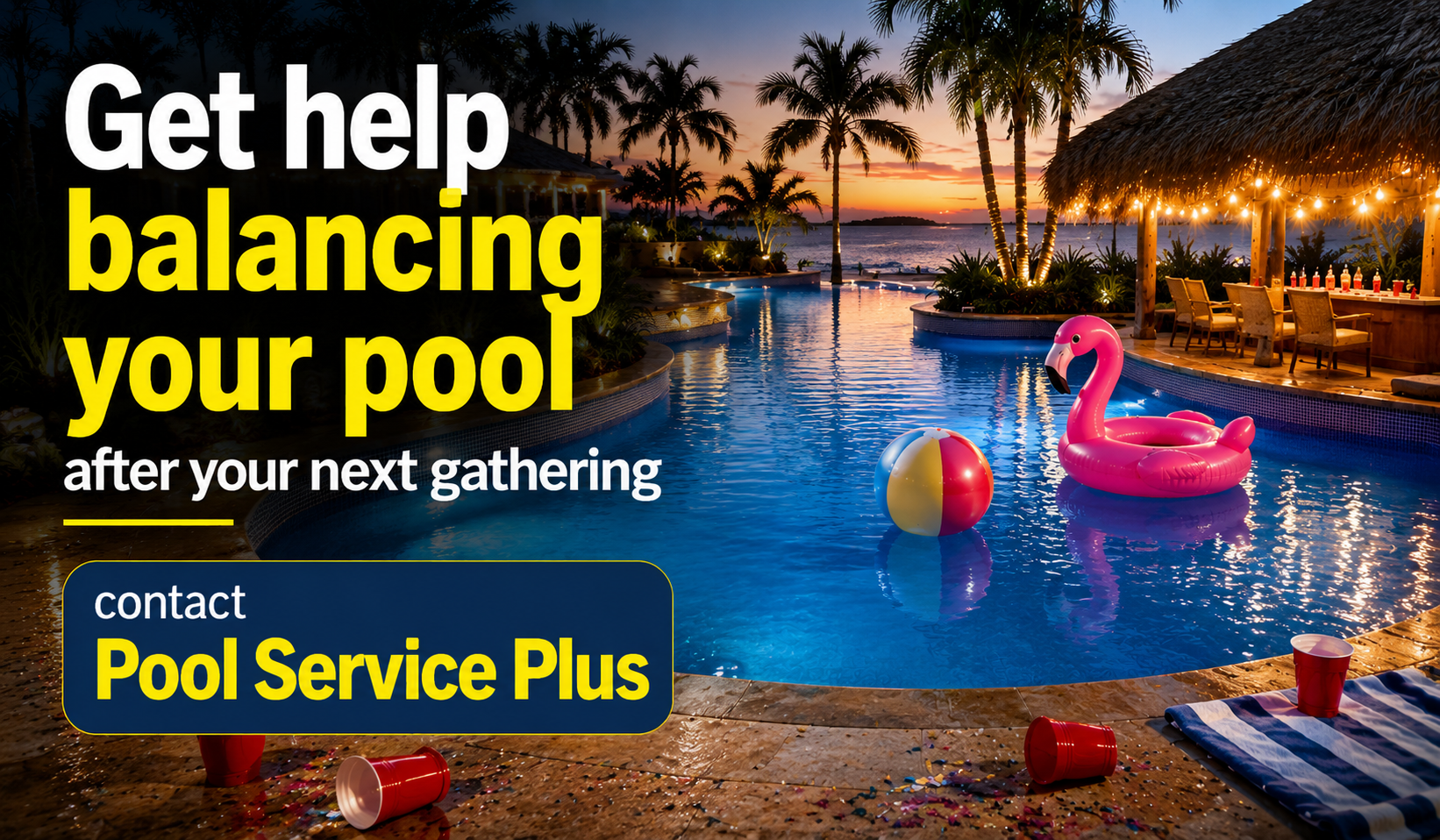
The party’s over. Everyone’s gone home. The pool looks just as clear as it did before everyone jumped in.
Here’s the thing: looking clean and being chemically balanced are two very different things, and the gap between them is exactly why shocking your pool after a party matters, even when the water seems perfectly fine.
At Pool Service Plus, we get calls every week from West Palm Beach homeowners surprised by cloudy or green water a day or two after a gathering. In many cases, the issue could have been avoided with a professional pool cleaning service before or after the event. Here’s what’s actually happening, and why shocking is the right move every time.
DATA POINT: Pool care experts consistently recommend shocking a pool after any event with heavy bather load, since organic contaminants from sunscreen, body oils, and sweat can overwhelm chlorine’s ability to keep the water sanitized, regardless of how clear it looks immediately afterward.
Every swimmer brings contaminants into the water: sweat, body oils, sunscreen, lotions, and sometimes more than that. Your pool’s chlorine works constantly to break these contaminants down, but there’s a limit to how much it can handle at once.
Chlorine continues sanitizing the water for hours after a party ends, but it’s working overtime. The visible clarity of the water doesn’t tell you whether your chlorine reserve has been depleted to dangerously low levels.
When chlorine reacts with contaminants like sweat and urine, it forms combined chlorine, sometimes called chloramines. Combined chlorine is far less effective at sanitizing water than free chlorine.
If combined chlorine levels exceed 0.2 parts per million, your pool’s sanitizing power is significantly reduced, even if your overall chlorine reading still looks adequate on a basic test strip.
PRO TIP: That strong “chlorine smell” people often associate with a clean pool is actually a sign of combined chlorine, not a sign of proper sanitation. A truly well-balanced pool has very little smell at all.
Shock treatments break down quickly in direct sunlight. Always shock after sunset to give the chemical time to work before UV rays start degrading it the next day.
IMPORTANT: Shocking during the day is one of the most common mistakes. Sunlight breaks down chlorine-based shock treatments within just a couple of hours, meaning most of the chemical never gets the chance to actually do its job.
Skipping this step doesn’t always cause an immediate problem. But combined chlorine and excess organic material create the perfect conditions for algae and bacteria growth over the following days, often showing up as cloudiness or a green tint 24 to 72 hours later.
There’s no exact number, but as a general guideline, any gathering significantly larger than your pool’s typical daily use, especially with five or more swimmers over several hours, warrants a shock treatment that evening.
A pool that looks clean right after a party isn’t necessarily a pool that’s safe to swim in the next day. Shocking after any significant gathering protects your water quality and prevents the algae blooms that are far more expensive to fix than a routine shock treatment.
Pool Service Plus helps West Palm Beach, Palm Beach Gardens, Jupiter, and Wellington homeowners stay ahead of these issues with reliable maintenance and emergency support when needed.
How soon after a pool party should I shock the water?
Ideally the same evening, after sunset. Waiting too long gives combined chlorine and organic contaminants more time to create conditions favorable for algae growth, especially in warm South Florida water.
Can I swim the day after shocking my pool?
Usually yes, as long as you test chlorine levels first and confirm they’ve dropped to a safe range, typically below 5 ppm. Most pools are safe for swimming within 8 to 24 hours after a properly applied shock treatment.
Why does my pool smell strongly of chlorine after a party even though I just shocked it?
A strong chlorine smell usually indicates combined chlorine, not excess sanitizer. This is exactly why shocking is necessary, since it breaks down combined chlorine and restores your pool’s actual sanitizing capacity.
Is it possible to over-shock a pool?
Yes, though it’s less common than under-treating. Excessive shock can temporarily raise chlorine to unsafe swimming levels and, in rare cases, affect certain pool surfaces. Following the recommended dosage for your pool’s specific volume helps avoid this.
Does Pool Service Plus offer post-party or emergency pool service?
Yes. Pool Service Plus provides responsive maintenance support, including post-event chemical balancing, for homeowners across West Palm Beach, Palm Beach Gardens, Jupiter, and Wellington. Contact us if you need help after your next gathering.